Updated: 11 December 2025

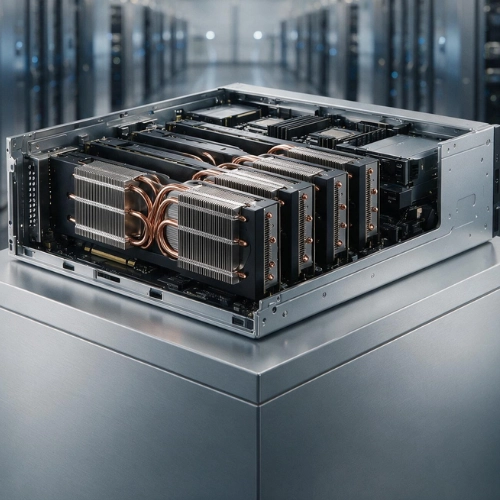
Enterprises across Bengaluru, Pune and Hyderabad keep pushing AI pilots into production. As soon as that happens, their data centres face a new truth. GPU-heavy compute behaves differently from the virtualised and storage-led traffic patterns they optimised for over the last decade. It demands higher power density, cleaner east-west paths, predictable latency and a fabric that does not surprise you under pressure.
If you plan to scale AI workloads, you need a design model that prepares your environment rather than reacts to it. The principles below reflect the patterns we see in AI-ready data centre projects across India.
GPU nodes draw more power than traditional CPU racks. A single rack can cross thresholds that once took several. Your design must plan for:
When enterprises in Noida and Chennai skip this layer, they discover limits after hardware arrives, not before.
AI workloads push thermal limits. Air cooling works for early-stage deployments, but as density grows, you need to review:
Your cooling plan should stabilise the environment so performance stays consistent as workloads scale.
AI training and inference need predictable latency, not just high throughput. A fabric built on Cisco’s spine-leaf architecture gives you:
When GPU clusters start to expand, this structure makes growth cleaner and operations simpler.
Training workloads generate large data flows that cross nodes, storage and services. This demands:
Cisco’s Nexus platforms support these patterns with flexibility in link speeds, telemetry depth and scale-friendly designs. The goal is to build an environment where the network never becomes the bottleneck.
You cannot operate an AI-ready environment without real visibility. Dense compute, accelerated memory paths, and multi-stage data flow leave little room for guesswork. A visibility model should track:
Cisco’s telemetry and analytics ecosystem helps operations teams move from reactive troubleshooting to pattern-based monitoring.
AI pipelines rely on fast, predictable access to large datasets. As your workloads expand, you need storage paths that can feed GPU clusters without delay. The design should include:
This ensures that your GPUs are never starved for data during peak cycles.
Your first AI cluster will not be your last. Designing for modular growth helps you add nodes, racks and fabrics without disturbing live work. Cisco’s switching and fabric models give you room to scale without redesigning the environment each time.
Firms in Mumbai, Hyderabad and Bengaluru are reaching the stage where AI workloads need stability and repeatability, not just hardware. When data centre architects follow these principles, they:
These outcomes matter as enterprises move from small-scale deployments to full production. This is where Proactive steps in. Our teams work across core data centre hubs in India, guiding enterprises through GPU-ready design choices, validating power and cooling models, and building fabric plans that align with Cisco's architecture. We do not treat AI-readiness as a hardware event; we treat it as an operational milestone.
Proactive brings experience from deployment, redesign and lifecycle operations. This gives you a grounded view of what will work and what will fail under continuous load.
AI-ready design is not about a single decision; it is about a system that behaves well under load. Review your power plan, cooling model, fabric design and telemetry readiness before you scale your clusters. The smoother your foundation, the smoother your AI adoption.

Rokendra Singh Product Manager, Data Center, Proactive Data Systems
We'll get back to you shortly.