Updated: 30 October 2025
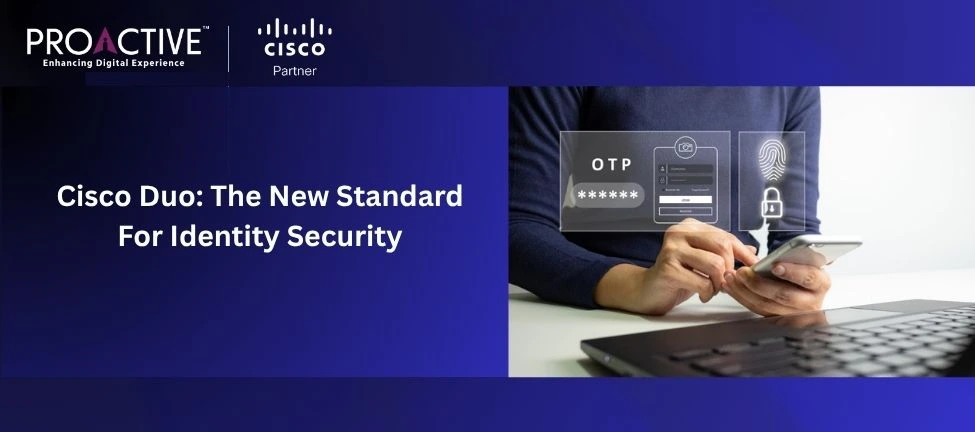
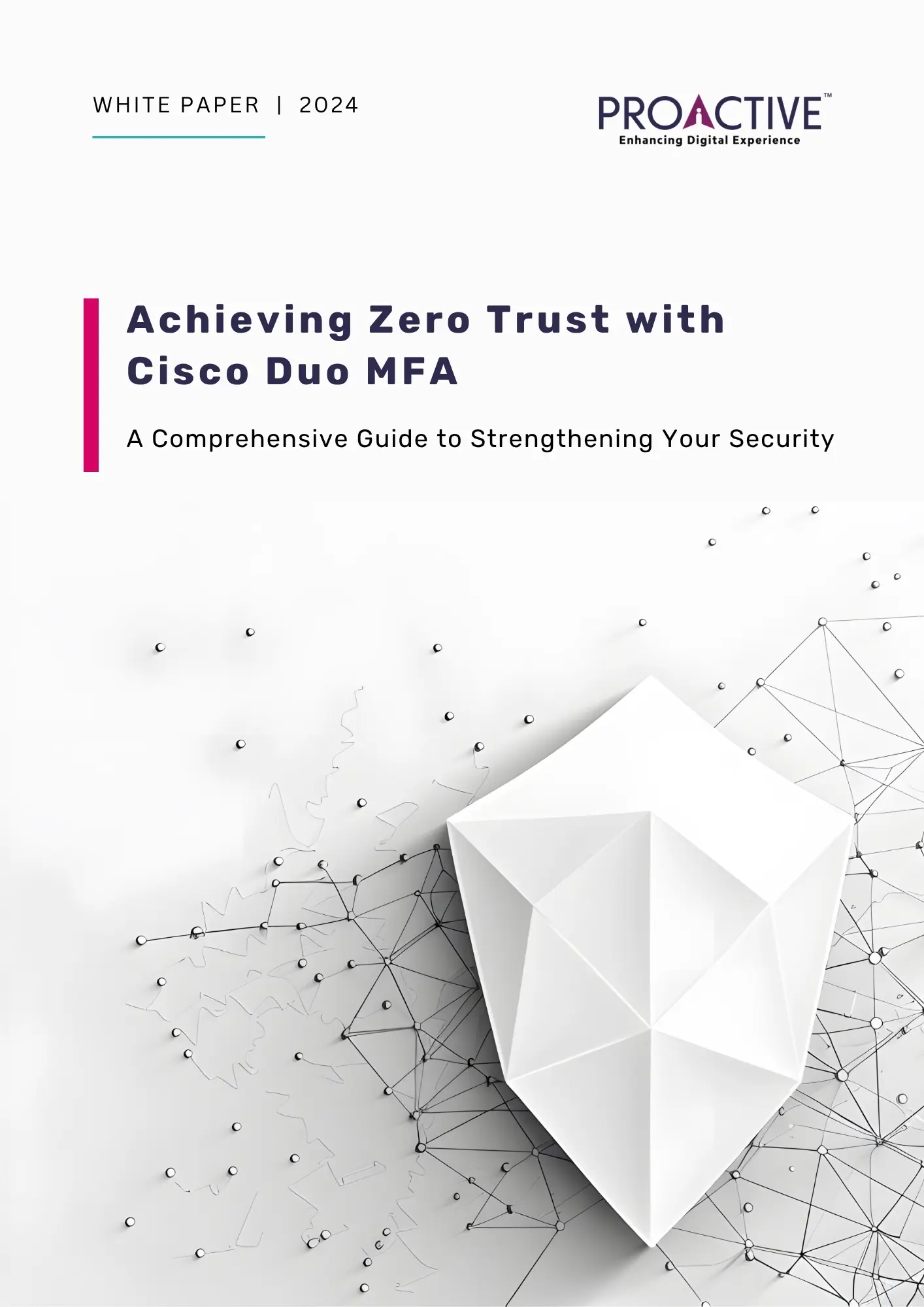
Multi-Factor Authentication (MFA) remains one of the most effective first lines of defence against credential-based attacks. It stops most unauthorised access attempts by requiring a second layer of verification. But attackers have adapted, using MFA fatigue, social engineering, and token replay to exploit gaps between authentication events. The new reality is that identity protection must evolve beyond static authentication into continuous trust evaluation, adaptive access control, and contextual analytics across users, devices, and workloads.
That evolution does not replace MFA; it refines it. Cisco Duo represents this next generation of authentication, where MFA becomes intelligent, context-aware, and deeply integrated with Zero Trust principles. Duo turns verification from a one-time event into a continuous, adaptive process that validates users and devices without friction.
Managed Identity Security uplifts static authentication into a living defence ecosystem. It unites Zero Trust, MFA, SSO, and Identity Governance and Administration (IGA) into one orchestrated model. Each login is validated not just by credentials but by context such as device security posture, network risk, geolocation, and behaviour anomalies.
When powered by Cisco Duo, enterprises gain adaptive access control that recalibrates trust continuously. Combined with Proactive Data Systems’ managed services, this framework eliminates the need for heavy internal administration while ensuring alignment with compliance frameworks like ISO 27001, RBI, and CERT-In.
Most mid-sized enterprises are on a three-stage journey:
Foundational Stage: MFA is deployed for VPN and cloud apps. User onboarding and offboarding rely on manual processes. Device visibility is partial. Breach detection remains reactive.
Advanced Stage: Centralised Identity and Access Management (IAM) replaces fragmented logins. Device health and posture assessments become mandatory. Security teams integrate authentication logs with SIEM systems such as Cisco XDR or Splunk.
Optimised Stage: Continuous verification across users and devices, governed by behavioural analytics. Privileged accounts follow strict least-privilege and just-in-time access. Access decisions evolve dynamically using AI models and risk scoring.
Only 27% of mid-sized firms globally have reached the advanced stage, according to a 2025 Cisco Cybersecurity Readiness Report. The gap lies in operational capability, not awareness.
Proactive Data Systems bridges the gap between theory and execution. Our managed identity security framework, built on Cisco Duo, delivers Zero Trust controls with enterprise-grade simplicity. The solution works across cloud and on-premise environments, enforcing verification without complexity or performance trade-offs.
Unified Authentication: MFA, SSO, and passwordless access through Cisco Duo integrated across SaaS, VPN, and legacy applications.
Device Trust and Posture Verification: Only compliant devices with validated OS patches and endpoint security can connect.
Policy-Based Automation: Dynamic access rules mapped to roles and context. Integration with Cisco SecureX and SIEM tools automates remediation and incident correlation.
Continuous Monitoring And Analytics: Telemetry-driven insights from authentication patterns, anomalies, and access behaviour reduce false positives and improve response speed.
The result is an identity-centric architecture where verification never stops, yet user friction remains minimal.
A recent Cisco Duo adoption survey (2025) showed a 98% reduction in unauthorised logins and a 40% improvement in incident response time when integrated with managed services. Proactive clients in BFSI and IT/ITeS sectors reported measurable compliance acceleration, achieving ISO 27001 audits 30% faster due to automated access controls and real-time reporting.
In growing organisations, identity governance determines resilience. Managed Identity Security extends beyond user login to cover access lifecycle management, privileged account monitoring, and audit-ready visibility. Proactive’s approach integrates identity governance with cloud-native automation, ensuring that no account remains orphaned or overprivileged.
Our service architecture ensures:
This orchestration converts compliance from a checklist into an ongoing state of readiness.
In a world of AI-driven threats, the speed of detection defines survival. By embedding Cisco Duo Managed Identity Security into your Zero Trust roadmap, you move from reactive defence to predictive resilience. Every authentication event becomes intelligence. Every anomaly becomes a proactive action.
The result: fewer breaches, lower operational overhead, faster audits, and elevated trust across your digital ecosystem.
Proactive Data Systems helps enterprises operationalise Zero Trust with Cisco Duo and identity-centric managed services. We deploy, monitor, and continuously tune your access framework, reducing risk, ensuring compliance, and freeing your team to focus on growth.
Managed Identity Security is an integrated framework combining Multi-Factor Authentication (MFA), Single Sign-On (SSO), Zero Trust, and Identity Governance and Administration (IGA) to secure user access and devices. With Cisco Duo at its core, it ensures continuous verification of every login, reducing credential-related breaches and improving compliance.
Zero Trust eliminates implicit trust by continuously validating users, devices, and sessions. For SMBs and mid-sized enterprises, this means stronger breach prevention, easier compliance, and reduced management overhead when combined with managed services like Cisco Duo and Proactive’s 24x7 security operations.

Alok Sah Head, Cybersecurity, Proactive Data Systems
We'll get back to you shortly.