Updated: 16 February 2026
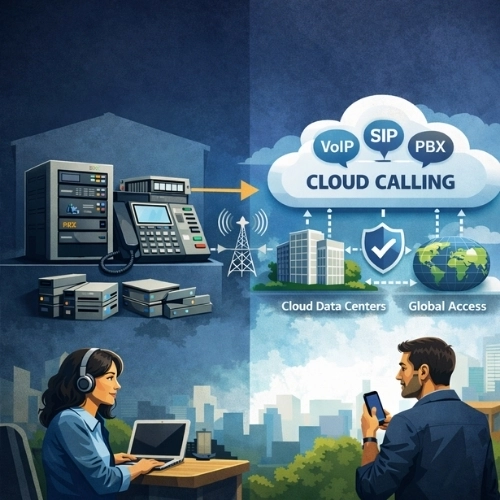
Cloud calling solutions in India replace traditional PBX systems with internet-based telephony platforms hosted in secure data centres. Instead of managing EPABX hardware in each office, organisations use cloud infrastructure to control call routing, user provisioning, analytics, and security policies.
For enterprises and mid-market companies, selecting the right cloud calling provider in India is a strategic decision that affects cost structure, scalability, compliance, and long-term operational stability.
Many organisations still operate legacy PBX infrastructure installed years ago. While functional, these systems create limitations when businesses expand across multiple cities or adopt hybrid work models.
Cloud telephony service providers offer:
The shift is not about trend adoption. It is about operational flexibility.
When evaluating cloud PBX providers or cloud calling providers in India, enterprises typically encounter three categories:
These providers bundle calling with telecom infrastructure. They may offer competitive pricing but limited customisation.
These focus on software-based telephony, often integrating with collaboration ecosystems.
These providers deliver cloud calling solutions backed by structured deployment methodology, network readiness assessment, and long-term governance.
Understanding which category aligns with your operational complexity is essential.
Cloud calling performance depends on ISP stability, bandwidth planning, and QoS configuration. Evaluate whether the provider conducts structured network assessments.
Enterprises operating across Delhi NCR, Mumbai, Bengaluru, Pune, Hyderabad, and Chennai require unified dial plans and centralised oversight.
User expansion should not require hardware upgrades or operational disruption.
Cloud telephony in India must align with regulatory requirements and numbering guidelines.
Evaluate compatibility with collaboration platforms, CRM systems, identity frameworks, and security policies.
Many telephony issues arise after deployment. Ongoing governance is critical.
The terms are often used interchangeably.
A hosted PBX refers to the underlying cloud-based call control infrastructure. Cloud calling is the broader service model that includes user experience, device access, analytics, and platform management.
When comparing cloud PBX providers, focus on architecture quality rather than terminology.
Cloud calling pricing models typically include:
The lowest quoted subscription does not necessarily reflect total cost of ownership.
Enterprises should assess resilience design, scalability model, and governance structure before making a financial decision.
A structured selection framework reduces long-term risk.
Selecting a cloud calling solution requires architectural discipline.
Proactive conducts structured network readiness assessments, evaluates ISP diversity, designs QoS frameworks, and executes phased multi-location rollouts aligned with business continuity requirements.
Ongoing monitoring and governance ensure performance consistency across all sites.
If your organisation is comparing cloud calling providers in India or assessing cloud PBX solutions for enterprise deployment, clarity should precede commitment.
Proactive is the Cisco Preferred Collaboration Partner, delivering enterprise-grade cloud calling solutions across India with structured deployment methodologies and long-term operational oversight.
Engage Proactive’s collaboration architects to evaluate your readiness before selection.

Proactive Collaboration Team
We'll get back to you shortly.