Updated: 13 February 2026
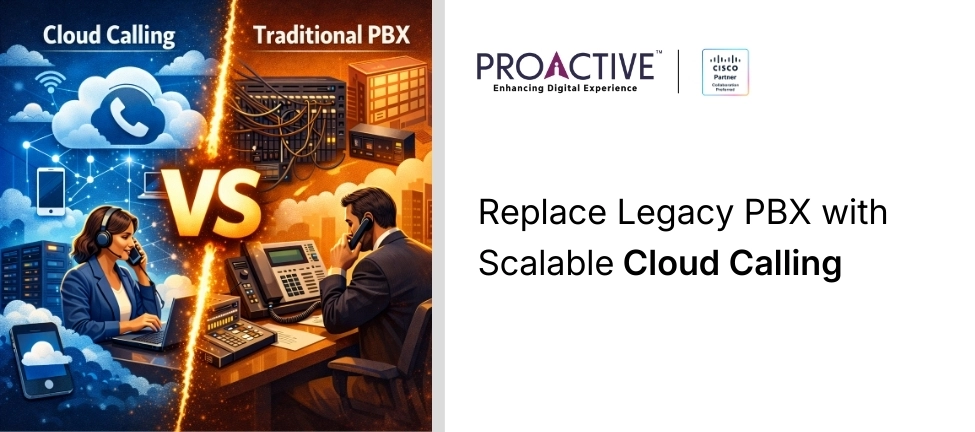
Traditional PBX systems rely on physical hardware installed within office premises to route internal and external calls. These systems use on-site switching equipment, PRI lines, and fixed infrastructure that require maintenance and periodic upgrades.
Cloud calling, by contrast, delivers telephony through cloud-hosted infrastructure. Instead of managing hardware in each office, organisations manage users, policies, call flows, and analytics from a centralised online platform.
For Indian mid-market and enterprise businesses, this distinction affects scalability, operational risk, and long-term cost structure.
A traditional PBX, often referred to as EPABX in India, is a private telephone exchange installed within a company’s premises. It connects internal extensions and routes external calls through telecom lines.
Key characteristics include:
These systems have served enterprises for decades. However, growth, hybrid work, and multi-location operations have exposed their limitations.
Cloud calling is a hosted business phone system delivered over IP networks. Call control, voicemail, IVR, and user management are handled through secure cloud data centres rather than on-premise hardware.
Users can make and receive business calls through desk phones, laptops, or mobile applications while IT teams manage configurations centrally.

For organisations operating across Delhi NCR, Mumbai, Bengaluru, Pune, or Hyderabad, managing multiple PBX systems increases operational complexity.
Traditional PBX systems typically require upfront capital expenditure for hardware, installation, and expansion modules. Additional costs include maintenance contracts and periodic upgrades.
Cloud calling shifts the model toward operational expenditure. Businesses pay subscription-based licensing fees per user, reducing large capital commitments.
However, enterprises should assess the total cost of ownership, including:
Lower upfront cost does not automatically mean lower long-term cost. Design quality determines financial efficiency.
Scalability and Growth
Expanding a traditional PBX often requires:
Cloud calling allows user provisioning through administrative consoles without hardware expansion. For fast-growing Indian enterprises or companies opening new branch offices, this difference is operationally significant.
PBX reliability depends largely on hardware stability and telecom line uptime.
Cloud calling reliability depends on:
• Internet bandwidth
• QoS configuration
• ISP redundancy
• Platform architecture
A poorly designed cloud deployment can create call quality issues. A properly engineered network can deliver consistent performance across locations.
Traditional PBX systems offer physical control but limited centralised visibility.
Enterprise-grade cloud calling platforms provide:
Indian enterprises must also consider regulatory requirements when migrating telephony systems.
Migration is typically justified when:
Switching should not be driven by trend cycles. It should be driven by operational need.
Enterprises often underestimate the complexity of moving from traditional PBX to cloud calling.
Common pitfalls include:
Migration requires structured assessment, phased rollout, and post-go-live governance.
Is cloud calling better than traditional PBX?
Cloud calling offers greater scalability and centralised management, while traditional PBX provides local hardware control. For growing enterprises, cloud models are generally more adaptable.
Can traditional PBX systems support remote work?
They can be extended, but often require additional configuration and infrastructure. Cloud calling is natively designed for remote access.
Does cloud calling eliminate the need for desk phones?
Not necessarily. Enterprises can continue using IP desk phones alongside softphone applications.
Is migration disruptive?
When phased and planned correctly, migration can occur without major business interruption.
Is cloud calling suitable for large enterprises in India?
Yes, provided network readiness and compliance are properly addressed.
Replacing a traditional PBX requires disciplined execution.
Proactive conducts structured network readiness assessments, evaluates ISP diversity, validates QoS configurations, and designs phased migration plans aligned with business continuity objectives. Post-deployment, governance frameworks and monitoring ensure performance consistency across locations.
If your organisation is assessing whether to replace existing EPABX systems with cloud calling, the decision should be grounded in operational clarity, not marketing claims.
Proactive is the Cisco Preferred Collaboration Partner, delivering enterprise-grade cloud calling solutions across India with structured deployment methodologies and long-term operational oversight.
Engage Proactive’s collaboration architects to evaluate your readiness before switching. Write to [email protected] and take the first step.

Proactive Research
We'll get back to you shortly.