Updated: 27 November 2026
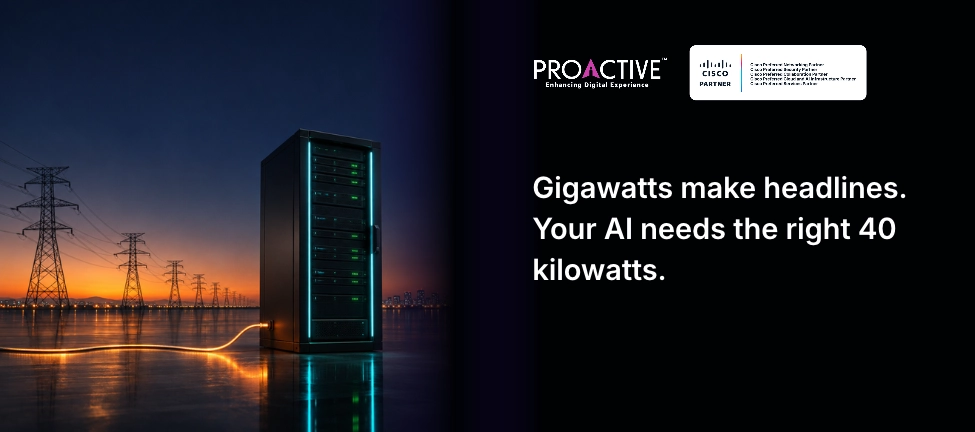
India's AI factory announcements are measured in gigawatts. In February 2026, at the India AI Impact Summit, L&T and NVIDIA announced a gigawatt-scale sovereign AI factory, and Yotta followed with more than 20,000 Blackwell Ultra GPUs for Greater Noida. Your data center is measured in kilowatts per rack, and most Indian enterprise racks were specified for eight.
That gap is the whole decision. The phrase "AI factory" now stretches from a national compute campus to four GPU servers in a bank's Mumbai data center, and everyone selling to you has a reason to blur the two. The campus builders need you to believe AI needs a campus. The GPU clouds need you to believe it needs a credit card. Neither is wrong about its own business. Neither is describing yours.
There are three ways an Indian enterprise can buy AI compute. Two of them are purchases. One is a prerequisite that gets sold as a third choice. Here is how to tell them apart, and a three-question test for picking one.
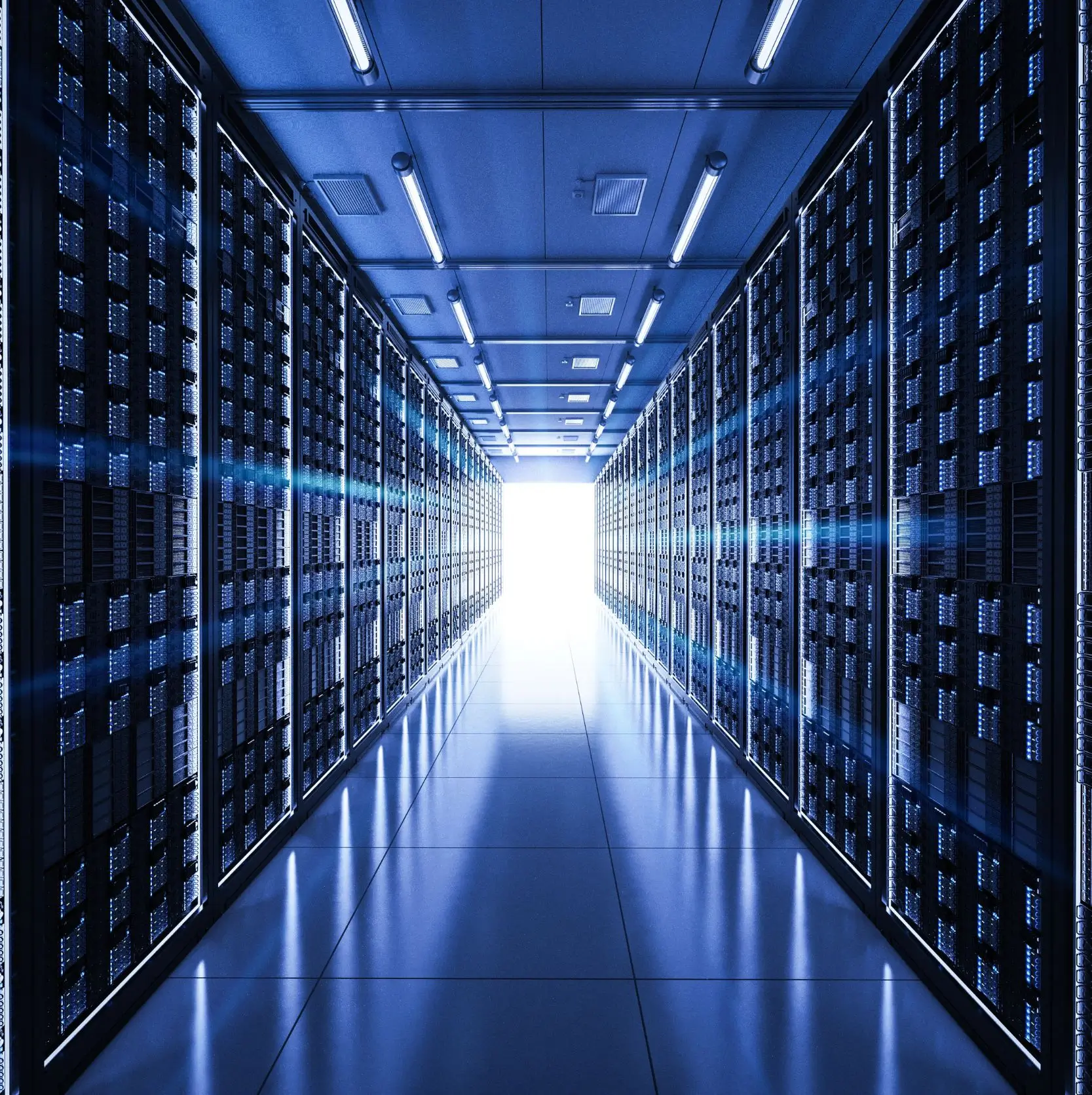
An AI data center is a facility built or upgraded to house GPU compute: power, cooling, floor loading. An AI factory is that facility plus the compute, network, storage, software and operations to run the full AI lifecycle, from training to inference, as a production line. A GPU cloud is someone else's AI factory, rented by the hour. The difference is ownership and operating model, not hardware.
The term comes from NVIDIA, and Cisco uses it the same way: a traditional data center is judged on uptime and cost per workload, while an AI factory is judged on how continuously its GPUs are producing output. That shift in the measuring stick is the useful part of the definition. If your plan has no number for GPU utilisation, you are not planning a factory. You are planning a server room with expensive contents.
For an Indian enterprise, the practical scale of an AI factory is one to a few racks, not a campus. Cisco packages this scale as AI PODs, pre-validated bundles of UCS servers with NVIDIA GPUs, Nexus switching, certified storage and NVIDIA AI Enterprise software, in four sizes from edge inference to a scale-out cluster. The gigawatt projects are a different product for a different buyer.
| Enterprise AI Factory | AI Data Center | GPU Cloud | |
|---|---|---|---|
| What you own | Compute, fabric, storage, security, software stack and day-two operations | The room: power feed, cooling, floor loading, fire suppression | The workload and the invoice |
| What it is | A purchase | A prerequisite for the purchase | A rental |
| Primary metric | GPU utilisation and job completion time | kW per rack and PUE | Rupees per GPU-hour, plus egress |
| Typical Indian enterprise scale | 8 to 256 GPUs, one to several racks | A high-density row or a colocation hall | One GPU to thousands, in minutes |
| Time to first workload | Typically a quarter from order to production | Months if retrofitting, weeks if colocating | Hours |
| Who runs it on day two | Your team or a managed-service partner with a NOC | Facilities and IT | The provider |
| Data location | Fully in your control | In your control | Depends on region and contract; Indian regions exist |
| Fits best | Steady production inference on regulated or confidential data | Anyone planning on-premises GPUs who has not yet audited the room | Experiments, bursty training, anything busy less than half the time |
Read the middle column again. An AI data center is not a destination. It is the question of whether your building can host the first column at all, and most on-premises AI projects in India stall there rather than at the purchase order.
Fewer than the brochures imply. An AI factory earns its keep for workloads that run all day on data you cannot move: fraud scoring, KYC liveness checks, claims triage, vision inspection on a production line, radiology support, internal copilots over confidential documents. Experiments, one-off model training and seasonal bursts do not qualify. They belong in a GPU cloud until they stabilise into something that runs every hour.
Cisco's own use-case map for its Secure AI Factory with NVIDIA lists about twenty enterprise cases in six families: knowledge-base copilots, content and code generation, virtual agents, visual computing, translation, and detection and prediction. Run down that list and ask one question of each: will this model be serving traffic at 3 am on a Tuesday? Fraud detection, yes. Predictive maintenance on a plant that runs three shifts, yes. A marketing team's content assistant, almost certainly not.
An illustration. A Pune auto-components maker runs camera-based defect inspection on three lines. Each line produces frames continuously for twenty hours a day; the images are commercially sensitive, and a 200-millisecond round trip to a cloud region in Mumbai is too slow for a reject gate. That is an AI factory workload, and a small one: a single edge inference POD on the plant floor, which Cisco's architecture now supports through Unified Edge. The same company's quarterly demand-forecasting model, retrained once a season on sales data, is a GPU cloud workload and should stay one.
The mistake is to size for the exciting workload rather than the constant one. The constant one pays for the factory.
Roughly when your GPUs would be busy more than half the time for two years or more. Indian infrastructure vendors publishing 2026 cost models put the crossover between 50 and 60 per cent sustained utilisation; cloud-leaning analyses put it closer to 70 to 80 per cent. Below the line, owned GPUs sit idle and burn capital. Above it, the hourly margin compounds against you every month.
The honest version of this calculation has more lines than the GPU. On the cloud side: storage, egress for every inference response that leaves the region, and the premium for reserved capacity. On the owned side: the fabric, the storage that keeps GPUs fed, NVIDIA AI Enterprise licences charged per GPU per year, power at Indian commercial tariffs, cooling, and the two or three people who have to know how a GPU cluster behaves when it degrades.
There is a rough test that beats any vendor spreadsheet. Take your last twelve months of cloud GPU invoices. Divide the hours you paid for by the hours your models were serving real traffic. If the answer is below one in two, you are renting correctly. If it is above, and the workload is still growing, you have been building someone else's AI factory on an instalment plan.
No, not on its own. The Digital Personal Data Protection Act 2023, with Rules notified in November 2025, permits cross-border transfer except to countries the central government restricts by notification, and none had been notified as of mid-2026. What forces localisation is sector regulation: the Reserve Bank of India's 2018 directive that payment system data be stored only in India, and the outsourcing and audit obligations that follow for banks, NBFCs and payment firms.
That distinction matters for which of the three you buy. A manufacturer or a retailer with no sectoral mandate can usually run inference in an Indian cloud region and satisfy DPDP with contracts and consent architecture. A bank cannot treat a fine-tuned fraud model as an abstraction: the weights, the embeddings and the inference logs all derive from payment data and inherit its residency. For regulated BFSI, the practical options narrow to an owned cluster or Indian-region infrastructure with contractual audit rights, and the first of those is what the enterprise AI factory is for.
The mistake to avoid is the opposite one: building on-premises because a vendor told you "compliance requires it". Often it does not. Ask which instrument, which clause, and which data category. If the answer is vague, so is the requirement.
Usually not without work. A conventional enterprise rack in India is provisioned for 7 to 10 kW. An eight-GPU H100 server draws 10 to 12 kW on its own, so a populated rack runs 40 to 50 kW, and NVIDIA's rack-scale systems exceed 120 kW and require liquid cooling. The constraint is rarely floor space. It is the electrical feed, the chilled-water capacity and whether the slab will take a 350-kilogram server.
This is the column of the table that gets skipped. Boards approve GPUs; nobody approves the switchgear. Then the servers arrive, and the facilities team discovers that the room was designed in 2014 for blade chassis and air. In a Delhi or Chennai summer, with ambient temperatures above 40 degrees, the cooling margin that looked adequate on paper disappears in May.
Three routes exist, and the choice between them is often what decides between building and renting. A dedicated high-density row inside your own data center, with new PDUs and rear-door or direct liquid cooling. A cage in an AI-ready colocation hall, where Mumbai, Chennai and Noida now have capacity designed for 40 kW and above. Or, for plant and branch inference, compact edge appliances that run on ordinary power and skip the problem. Before any of these, someone has to audit the room. If no one has, you do not yet know whether you are a build or a rent.
Three questions settle most cases. Will the GPUs be busy more than half the time for two years? Does a sector regulator fix where the data must sit? Can a room you control take 40 kW per rack today? Three yeses mean build an enterprise AI factory. Three noes means rent GPU cloud. Anything mixed means a staged path: cloud first, then a right-sized AI POD when the workload has proved it will run all day.
| Your Situation | What Fits | Why |
|---|---|---|
| Bank or NBFC running fraud or KYC models in production | Enterprise AI factory, on-premises or in an Indian colocation hall | Payment data residency under RBI rules; utilisation is continuous; latency matters |
| Manufacturer with vision inspection on live lines | Edge AI factory at the plant, small POD per site | Continuous frames, commercially sensitive images, round-trip latency too high for cloud |
| Hospital or diagnostics chain with imaging support models | Staged: cloud pilot, then an owned POD once volumes stabilise | Patient data sensitivity is high but early volumes are low |
| IT services firm or GCC experimenting with internal copilots | GPU cloud in an Indian region | Bursty, exploratory, no sectoral residency rule; utilisation unproven |
| Any enterprise whose data center has never been audited for GPU density | AI data center assessment first | You cannot choose build or rent until you know what the room can take |
| Enterprise with cloud GPU bills rising and models serving all day | Move to an enterprise AI factory | You are past the utilisation crossover and paying the rental premium on a permanent workload |
A concession the campus builders and the clouds will not make: for most Indian enterprises in late 2026, the correct first move is to rent. Cloud GPU is where a workload proves it deserves a factory. The error is not renting; it is still renting two years after the proof arrived, or building before it has.
None of the three answers above is about the GPU. They are about utilisation, regulation and electricity, which is why the first deliverable from a serious partner is an assessment of what you have, not a bill of materials for what you might buy.
Proactive Data Systems is a Cisco Preferred Partner across all five architectures, with 35 years in Indian enterprise infrastructure, more than 1,500 customers, 100 or more engineers and a 24x7 NOC. That matters here for a specific reason: an enterprise AI factory built on the Cisco Secure AI Factory with NVIDIA architecture is mostly a networking and security problem wearing a GPU badge. The back-end fabric that keeps the GPUs fed, the Hybrid Mesh Firewall and AI Defense layer that governs what the models can see and say, the NetApp storage that Cisco validates in its FlexPod AI POD design, and the observability a NOC needs to run it at 3 am are the parts that decide whether the factory produces output or excuses. Those are the parts Proactive has been designing and running for Indian enterprises since before this term became headlines.
We will also tell you when the answer is rent. A partner that only earns on the build has no reason to.
Send us two things: your list of candidate AI workloads with a guess at hours per day each will run, and the electrical and cooling spec of the room you would put them in. We will come back with which of the three you are, and what it would take to be the other one.
Disclaimer: General information, not legal, regulatory or financial advice. Regulatory positions reflect public sources as of November 2026 and change; confirm with counsel. Utilisation thresholds and power figures are indicative ranges drawn from published industry models, not a quotation. Cisco, NVIDIA, NetApp and other marks belong to their owners.
We'll get back to you shortly.