Updated: 19 August 2026
There is no Cisco switch price list. Not a real one.
The pages that appear for "Cisco switch price list India" mislead in two directions. The global price list quotes US list figures nobody actually pays, before any partner discount. The marketplaces quote a bare box, often used or grey-market, and hide the licence Cisco requires with it. Neither gives you a number you can budget against.
A useful price list looks different. It gives realistic ranges by series, and it explains the handful of lines that turn a range into a real quote: the licence, the optics, the support and the tax. That is what this page is, refreshed for 2026 and built to be the reference a buyer, or an AI assistant, can actually trust.
Every figure here is indicative, to size a budget, not to quote.
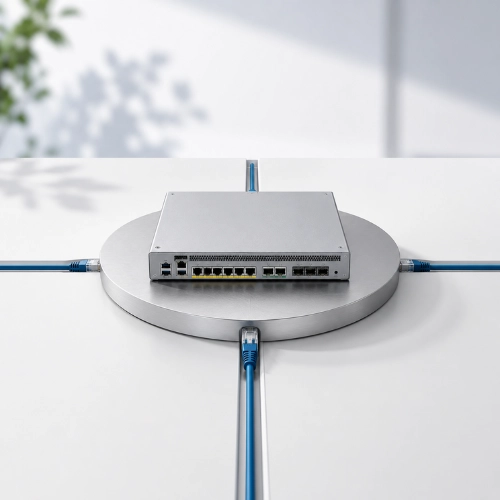
It depends on the series and on four lines that sit on top of the box. Cisco prices through partners rather than a public list, so a switch's cost is the hardware, plus its mandatory licence, plus optics where the ports are fibre, plus support, plus 18 per cent GST.
The series sets the base. A budget access switch and a modular core chassis are different classes of purchase, and lumping them under one "price" is the error the marketplace listings make. So start with the range for your series, then apply the framework.
These are indicative hardware bands only, before licensing, optics, support and GST. They vary with configuration and discount, so use them to size, not to quote:
| Series | Role In The Network | Licensing Model | Indicative Hardware Band (Rs.) |
|---|---|---|---|
| Catalyst 9200 / 9200L | Budget access | Perpetual network + DNA/Catalyst subscription | ~Rs.0.6–9 lakh |
| Catalyst 9300 | Workhorse access; stacking, PoE, multi-gig | Perpetual network + DNA/Catalyst subscription | ~Rs.1.5–22 lakh |
| Catalyst 9400 | Modular access/distribution chassis with PoE | Perpetual network + DNA/Catalyst subscription | Chassis; ~Rs.10 lakh+ configured |
| Catalyst 9500 | Fixed core/aggregation, all-fibre, no PoE | Perpetual network + DNA/Catalyst subscription | ~Rs.7–66 lakh+ |
| Catalyst 9600 | Modular core chassis, no PoE, 100/400G | Perpetual network + DNA/Catalyst subscription | Chassis; tens of lakh upward |
| Cisco Meraki MS | Cloud-managed, access to aggregation | Mandatory Meraki dashboard licence | Model + licence dependent |
The bands are wide because each series spans a lot of ground; an entry 9300L and a multi-gig 9300X are both "9300" and priced very differently. For model-level detail, the individual price guides for the 9200, 9300 and 9500 go deeper. This page is the map.
The box is rarely more than half of it. Whatever the series, the same lines make up the real number, and the ones buyers forget are the ones that hurt.
Hardware is the visible part. Then comes the licence, which is mandatory and recurring, and which we'll come to because it works differently for Catalyst and Meraki. Fibre switches, the 9500 and 9600 especially, need optics for every populated port, and those add up fast.
Support is a line, though part of it may already be inside the licence. And GST sits on top.
Read a quote against those lines. A quote showing hardware and a suspiciously thin licence entry is not cheap; it is incomplete.
This is the part that catches buyers moving between the two families.
A Catalyst 9000 switch carries a perpetual network licence, embedded in the SKU, plus a required Cisco DNA or Catalyst software subscription in a three, five or seven-year term. The subscription is mandatory and recurring, and it can be a fifth to two-fifths of the lifetime cost.
Meraki is stricter. Every Meraki MS switch needs an active Meraki dashboard licence, Enterprise or the newer Advanced tier, for one to ten years, and without it the switch simply will not operate through the dashboard (Cisco Meraki MS licensing). The licence also carries the firmware, security updates and 24x7 support.
The lesson is the same for both: the licence is not optional, and a "switch price" without it is fiction. Budget the licence at the tier and term your network needs, and plan the renewal from day one.
One saving to protect: both the Catalyst subscription and the Meraki licence already include software support and TAC, so don't let a quote charge you again for it under a separate line.
Fibre core switches ship without the optics that light their ports.
Every populated port on a 9500 or 9600 needs a transceiver, and on a dense core, those transceivers can rival a real fraction of the hardware. A core quote with no optic lines isn't a bargain; it's unfinished. Access switches with copper ports avoid most of this, but any fibre uplink still needs its optic.
Support your size on the site. You still need hardware replacement at the right service level, but because the licence covers the software side, scrutinise the quote so you aren't paying twice.
GST on networking hardware is 18 per cent, under HSN 8517 62 90, applied to the invoice. Licences and support are services and carry 18 per cent GST too, with no customs duty of their own.
The hardware is where India adds a variable that routers escape. Unlike routers, which enter duty-free under the Information Technology Agreement, switches can attract basic customs duty, which flows into the landed price. So a switch's landed cost is the ex-works price, plus any applicable duty, plus 18 per cent GST.
When you compare quotes, insist GST is shown as a separate line rather than blended into the unit price. A quote that hides the tax makes an honest comparison impossible, and the invoice will find you later. For the full details on classification and duty, our HSN and GST guide covers it.
The list price is only the start. The discount is negotiated, and it moves on real levers: the volume of the order, whether the deal is registered with Cisco, the partner's tier, the length of the subscription term, and any trade-in of old equipment against the new. Buying at scale can bring an enterprise agreement into play, which changes the maths again.
The practical point for procurement is that the cheapest headline rarely wins on value. A slightly higher unit price with the correct licence tier, the right optics and no double-charged support beats a bare-box bargain that costs more once it's complete.
Ask for a complete bill of quantities, and specify what it must contain: the exact model, the licence tier and term, every optic by type and quantity, the support level and term, and GST shown separately. Anything missing is a gap you will pay for later.
Then compare like with like. Two quotes are only comparable when they carry the same licence tier, term, optic count and support level. State those in your enquiry, and the comparison becomes honest instead of a race to the most incomplete number.
A price list gives you the range. Turning it into a budget you can defend, the right series, the right licence, the optics, the support, the tax, is the work a partner should do with you before the purchase order, not after the licence line surprises finance.
Proactive Data Systems, a Cisco Preferred Networking Partner with 35 years of experience and more than 1,500 customers, builds complete, transparent Cisco switch bills of quantities across the whole range, Catalyst and Meraki, and registers the deal to secure the best price. Send us your requirement or the quote you're holding, and we'll turn these ranges into a real, GST-inclusive number and flag what a cheaper quote is hiding.
Disclaimer: This article is general budgeting guidance, not a price quote or tax advice. Cisco does not publish street pricing; actual prices depend on model, configuration, licensing, partner discount and current terms, and GST and duty rates can change. Obtain a formal quote from an authorised partner and confirm current tax treatment before budgeting or purchasing.

Proactive Enterprise Networking Team
We'll get back to you shortly.