
Updated: 04 June 2026
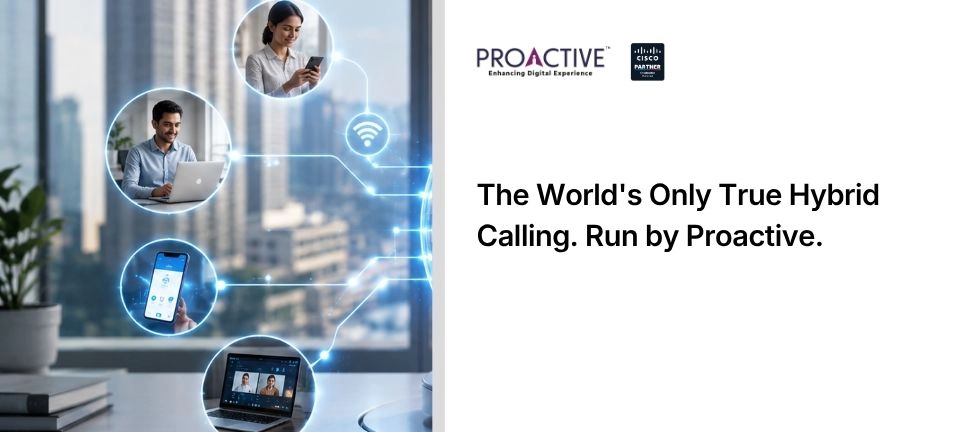
In short: Hybrid cloud calling keeps call control on your own premises while adding cloud services on top, by design rather than as a fallback. Webex Calling is the only enterprise platform that runs on-premises, cloud and hybrid at the same time, with call data stored in India.
Every few years, a salesperson walks into your office and tells you to throw your phone system away. Rip out the racks. Retire the PBX. Move every call to the cloud, sign here, and trust that the internet never blinks. It is a clean story. It is also the wrong one for most businesses that hear it, and it ignores a third option the market rarely explains: hybrid cloud calling.
You know this, because you run real infrastructure. You have a plant in Pune where a fibre cut cannot be allowed to silence the floor. You hold call recordings that an auditor may ask for. You have eight sites, three carriers, and a finance team that remembers what the last migration cost. The cloud is not frightening to you. Being told to bet your operations on a single internet link, on day one, with no way back, is.
So here is a question worth sitting with. What if the choice itself, cloud or on-premises, is the trap? What if the right answer is to refuse it?
One platform on the market lets you do exactly that. Webex Calling is the only enterprise calling system in the world that runs on-premises, in the cloud, and in true hybrid at the same time, as a permanent design rather than a one-way door. Not a migration path you are hurried through. A standing choice you get to keep.
The word gets abused, so let us be precise. Hybrid cloud calling does not mean a soft client that falls back to a desk phone. It does not mean a cloud system with a backup mode. It means that call control itself, the brain that decides what every phone does, can stay on your own Cisco Unified Communications Manager inside your building, while you add cloud services on top, one at a time, only where they earn their place.
Want an AI receptionist for the head office in Mumbai, cloud analytics for the contact centre, and mobile apps for a sales team that lives on the road? Add them. Want call control for the Chennai hospital's nurse stations to stay on-site, answering even if the link to the world goes dark? Keep it. Same dial plan. Same console. One system, running in two worlds, on your terms.
This matters because hybrid is already how serious organisations operate everywhere else in their estate. In Flexera's 2024 State of the Cloud survey, 73% of organisations described their infrastructure approach as hybrid (Flexera, State of the Cloud Report 2024). Your servers are hybrid. Your storage is hybrid. Your security is hybrid. Why should the one system that has to work when everything else fails, your voice network, be the exception forced into an all-or-nothing bet?
A platform is only as good as the ground it stands on, and Indian ground is uneven. A new captive centre in Bengaluru can switch on pure cloud calling and never look back. A 900-seat manufacturer in Kanpur, with five branches and a last mile that no one will guarantee, is a different conversation entirely. Treating them the same is how migrations go wrong.
There is a second pressure, and it is getting heavier. India's Digital Personal Data Protection Act (DPDPA) Rules, notified in 2025, give enterprises a fixed runway to govern where personal data lives and how it is handled, with the core obligations landing over the following eighteen months (Ministry of Electronics and Information Technology, Digital Personal Data Protection Rules, 2025).
Voice is personal data. A call recording is a customer's voice, an employee's grievance, a patient's history. Where it rests, who can reach it, and how fast you can produce it are no longer questions for the IT basement. They are questions a board will ask you, and ones your DPDPA telephony checklist should already answer.
Webex Calling answers them in-country. Cisco runs dedicated data centres in Mumbai and Chennai, with call recordings, call detail records, voicemail and audit logs stored in India, and PSTN delivered through carriers you already trust, Airtel and Tata. Sovereignty stops being a worry you carry and becomes a line in the design. For a regulated business, that is the difference between adopting cloud and being told you cannot.
When a category has one true product, the market fills with things that wear its clothes. Two come up in every evaluation, so name them plainly.
Microsoft Teams Phone offers Direct Routing. That is a way to connect the public telephone network to a cloud phone system. The call control still lives in the cloud. Pull the internet, and you have a handset that lights up and does nothing.
Zoom Phone offers a survivability module that wakes only when the cloud connection drops. It is a parachute, not a permanent address. Useful in a fall, but you would not choose to live in the air.
Neither gives you what a hospital, a bank, or a plant actually needs, which is call control that can sit on your premises by design, indefinitely, with the cloud as a guest you invite rather than a landlord you depend on. We set out the full head-to-head in our Webex, Teams and Zoom comparison. Ask the vendor in front of you a single question. Can your system keep running my site if my link to you disappears for a week, not as an emergency, but as a normal way to operate? Listen to how long the answer takes.
Picture two buildings.
The first is a polymer manufacturer with 1,200 staff across plants in Pune and Ahmedabad and a head office in Delhi. Its analogue exchanges are a decade past their prime. The board wants modern collaboration. The plant heads want one promise above all others, that no upgrade will ever take the factory phones down during a shift. Webex Calling Hybrid for manufacturing gives both sides their way. Call control stays resilient at each site, the cloud carries meetings, mobility and analytics, and the GSM gateways the plants depend on keep doing their job. No forklift. No dark site. No shift lost.
The second is a hospital group running sites in Chennai and Coimbatore. The administrators want cloud agility for booking and back-office teams. The clinical leadership will not move nurse-station calling off-site for any price, and patient records cannot leave the country. One hybrid platform serves both instincts. Critical lines stay on-premises and answer through a power cut. Administrative staff work from the cloud. The data stays in India, ready for any question a regulator might bring.
Two buildings, two opposite demands, one architecture. That is what owning the only true hybrid in the world buys you. The freedom to stop apologising for being complicated, because the platform was built for complication.
The Platform Is Cisco's. The Outcome Is Yours to Choose a Partner For
Here is the part most vendors skip. Buying Webex Calling is a decision you can make in an afternoon. Running it across six sites, a legacy exchange and a workforce that has dialled the same way for ten years is an engineering problem, and engineering problems are won or lost on who you hand them to.
Plenty of partners hold a Cisco badge. Far fewer can show you the work behind it. Proactive is one of a very small group in India recognised as a Cisco Preferred Collaboration Partner, and one of the few holding all five Cisco portfolios rather than treating collaboration as a sideline to a networking business. The proof is in the deployments, not the brochure. India's first Webex Calling rollout in manufacturing, delivered for Lohia Corp. A 5,750-user cutover completed where others would still be planning. More than 10,000 users live, and a record of zero failed migrations behind them.
What does that buy you in practice? A partner who treats go-live as the start, not the finish. Most collaboration projects fail after the launch party, when the day-two questions arrive, and the installer has moved on. Proactive runs Managed Cloud Calling as a standing service, provisioning, monitoring, number management, call-quality analytics and one number to call when something breaks at eleven at night before a board meeting. They keep a live calling lab with a local gateway and one of India's largest demonstration inventories, so the design you are sold is the design you have already seen working.
So before you sign the clean story anyone is selling you, put three questions on the table.
If the internet to this site fails for a week, do my phones still work, by design or by luck? When an auditor asks where a recording from last March is stored, can I answer in one sentence? And when the migration hits the problem no slide deck predicted, who picks up the phone, and have they solved it before?
If the answers make you pause, you have been offered the wrong choice. There is a platform that refuses it, and a partner in India who runs that platform for a living. The cloud is coming for your phone system. You simply do not have to surrender your ground to let it in.
Talk to a Proactive Webex Calling architect and design the hybrid that fits your business, not someone else's slide.
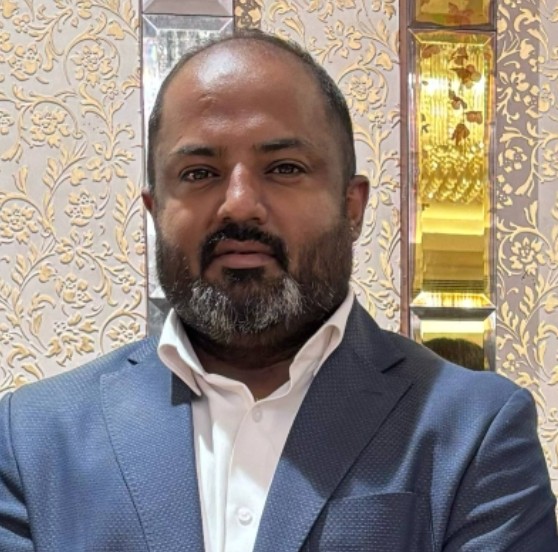
Kunal Gill Head, Cloud Calling Practice, Proactive Data Systems
We'll get back to you shortly.
