Updated: 17 July 2026
An illustrative case study based on representative HCI modernisation engagements. The organisation is not named; the protagonist's name has been changed on request. Figures are indicative of outcomes typical of such projects.
The situation: A global insurer's India operation was running twelve racks of ageing three-tier infrastructure, with separate compute, storage, and networking, that had sprawled into wasted space, slow provisioning, and an unanswered hybrid-workforce problem.
The move: Rather than refresh like-for-like, the team consolidated all three tiers onto a single hyperconverged platform (Dell VxRail on VMware) and delivered staff desktops from it as VDI, migrated in waves with production never stopping.
The outcome: Roughly 40% of the data center footprint reclaimed, provisioning cut from weeks to hours, capacity managed as one pool, and desktops turned into secure profiles available anywhere.
The room told the story before any spreadsheet did.
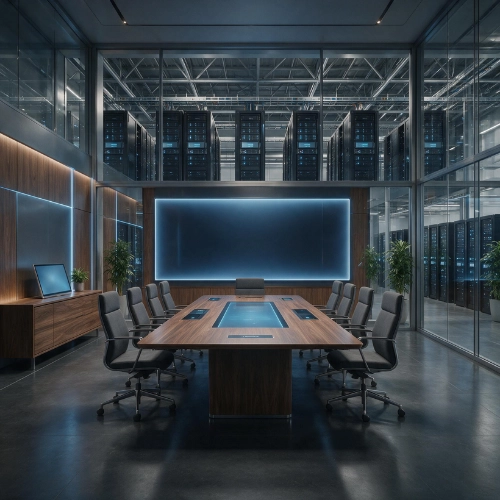
When Arjun Nair (name changed on request), infrastructure head for the India operations of a global insurer, walked his primary data hall, he counted twelve racks of three-tier infrastructure: separate servers, a sprawling storage area network, and the switching to stitch them together. Much of it was ageing into a refresh window. All of it was consuming power, cooling and floor space at a rate the business had stopped questioning years ago, because that was simply what a data center cost.
What changed was not the technology. It was the question. His leadership had asked for two things at once that the old architecture could not deliver together: a hardware refresh that did not balloon the footprint, and a way to give a growing hybrid workforce secure desktops without shipping laptops across the country. The three-tier estate answered neither well. So he stopped asking how to refresh it and started asking whether to replace the architecture entirely.
Three-tier infrastructure is not wrong. It was the right design for a long time. But in this estate it had calcified into sprawl, compute in one set of racks, storage in another, each scaled independently, each refreshed on its own cycle, each with its own management and its own failure modes.
The costs were not just floor space. Provisioning a new environment meant coordinating across three teams and waiting weeks. Capacity planning was a guessing game played separately for compute and storage, which meant paying for headroom on both. And the workforce question, thousands of staff who now expected to work securely from anywhere, had no clean answer in an architecture built for desktops bolted to desks. Nair's team was maintaining a lot of infrastructure that was quietly working against the outcomes the business now wanted.
The alternative was hyperconverged infrastructure. Rather than replace the old servers with new servers and the old storage with new storage, the team collapsed compute, storage and virtualisation into a single platform, Dell VxRail running VMware, that scaled as one system, a node at a time.
The move was deliberately unglamorous. There was no rip-and-replace weekend, no flag-day cutover. HCI let the team stand up the new platform alongside the old, prove it with real workloads, and migrate in controlled waves. Onto that same consolidated platform they layered VDI, virtual desktops delivered from the data center, so the workforce question and the infrastructure question were solved by one architecture rather than two projects.
The logic that sold it internally was simple. One platform to manage instead of three tiers. Capacity added in predictable increments instead of two separate guessing games. And desktops that lived in the data center, secure, centrally managed, available from anywhere, instead of a fleet of endpoints to chase.
An insurer does not get to pause. Claims, policies and customer systems had to keep running throughout, so the migration was engineered around that constraint rather than against it.
The team assessed the estate, piloted a representative slice of workloads on the new HCI platform, then migrated in waves, validating each before moving to the next, with the ability to roll back if a wave misbehaved. VDI was rolled out in parallel, cohort by cohort, so the workforce moved onto virtual desktops without a single disruptive switchover. The old three-tier gear was decommissioned only once its workloads were proven on the new platform. What could have been a high-risk event became a sequence of small, reversible steps.
The headline number was the one the leadership had asked for. By retiring the three-tier estate for a consolidated HCI platform, the operation reclaimed roughly 40% of its data center footprint, floor space and the power and cooling that came with it, freed for other use or simply retired as cost.
| Measure | Before | After |
|---|---|---|
| Data center footprint | Twelve racks of three-tier gear | Consolidated HCI, ~40% less space |
| Provisioning a new environment | Weeks, across three teams | Hours, on one platform |
| Capacity planning | Separate for compute and storage | One pool, scaled a node at a time |
| Workforce desktops | Endpoint fleet, hard to secure | VDI from the data center, secure anywhere |
| Management | Three tiers, three skill sets | A single, unified platform |
But Nair is quicker to talk about the second-order effects than the floor space. Provisioning that once took weeks now took hours, because there was one platform to provision on, not three tiers to coordinate. Capacity became a single pool grown in steps, which ended the habit of over-buying headroom on two fronts at once. And VDI turned the workforce problem inside out: desktops became profiles delivered from the data center, secure by default and available wherever staff worked, which the security and compliance teams valued as much as the users did.
The refresh that leadership had framed as a cost became, in his words, the moment the infrastructure started matching the business again.
Reading it back, the win was not the hardware. VxRail and VMware are proven; plenty of organisations own them. The win was treating a refresh as a chance to change the architecture, and running the migration so carefully that a live insurer never felt it. That combination, the right consolidation decision and a low-risk path to it, is what turned an ageing three-tier estate into 40% of a data center handed back.
That is the specific work Proactive Data Systems does: modernising three-tier estates onto hyperconverged infrastructure and VDI, designed for the workloads and migrated without downtime. As a Cisco Preferred Cloud and AI Partner, Dell Platinum Partner and NetApp Preferred Partner with 35 years in enterprise IT, more than 1,500 organisations served, and a 24/7 service desk in India, we own the outcome from first design to day-two operations. To see what consolidating your own estate could reclaim, ask Proactive for an HCI modernisation assessment.

Proactive Data Center Team
We'll get back to you shortly.