Updated: 10 June 2026
Webex Calling is a fully regulated India offer. Webex Communications India Private Limited holds a Department of Telecommunications (DoT) Unified Licence (Virtual Network Operator) authorisation issued on 25 May 2022. Call media, recordings, Call Detail Records (CDRs) and audit logs for Indian users stay in Cisco's Mumbai and Chennai data centres. PSTN runs through Local Gateway with a DoT-licensed Indian carrier, or through Cloud Connected Partner PSTN with Bharti Airtel and Tata Communications.
The basics are well documented. The rest of this piece is what we see customers get wrong.
Indian telecom regulation, set by the DoT and overseen by the Telecom Regulatory Authority of India (TRAI), treats enterprise voice as a regulated service, within the framework now transitioning from the Indian Telegraph Act 1885 to the Telecommunications Act 2023.
Webex Communications India holds UL-VNO authorisation 20-1214/2020-AS-I, covering Access Service (Mumbai), National Long Distance (NLD), International Long Distance (ILD) and Internet Service Provider Category A (ISP-A). PSTN interconnect runs through DoT-licensed Indian operators on either path: on-premises Local Gateway (LGW) or Cloud Connected Partner PSTN (CCPP), with Bharti Airtel and Tata Communications confirmed live, Tata Tele Business Services in announced rollout.
What Webex Calling Data Stays in India?
| Data Category | Location |
|---|---|
| Call media, signalling, recordings, voicemail | India |
| Call Detail Records (CDRs), audit logs, syslogs | India |
| User identity, administrator activity for India events | India |
| PSTN media (user audio, MoH, greetings, announcements) | India |
Cisco's Mumbai and Chennai data centres are certified to ISO 27001 and related security standards.
Cisco's docs let you choose. Field experience narrows the choice to four rules.
1. Greenfield site with no existing PRI: go CCPP. Faster to stand up, no LGW hardware to refresh, no SIP options to tune.
2. Site with a working PRI and three or more years of useful life on the existing gateway: stay LGW for the residual lifecycle. Decommission at the next refresh window, not before. Sunk cost has actual life.
3. Branch sites under 50 seats: default to CCPP. The LGW operational overhead does not pay back at that scale.
4. Sites with high-volume or regulated voice (BFSI core, contact centres, plant control rooms) and a regional disaster-recovery requirement: keep LGW for the resilience pattern, with a documented failover path to CCPP.
Multi-site Indian enterprises typically run both. The mix is the point.
Five things we see go wrong, in order of frequency.
The Customer Acquisition Form requires an authorised signatory aligned with the company's MCA records. Mismatched director signatures, board-resolution scope and proof-of-address documents are the most common reasons a Webex Calling India activation slides by a week.
Some carrier configurations reject the LGW's SIP OPTIONS handshake on registration-based trunks. Resolution involves either switching to certificate-based trunking or working with the carrier on the SBC options policy. Plan for it.
India emergency numbers (100 police, 101 fire, 102 ambulance, 108 unified emergency, 112 nationally) need explicit per-site routing and address mapping in Control Hub. Default configurations from a US or EU template will not work and will fail an internal audit.
CDRs are stored in UTC by default. India audit and incident-response workflows expect IST. Either configure the Control Hub view in IST or build the SIEM ingestion with the time conversion. Forensic reconstruction inside the CERT-In six-hour window is hard if timestamps are off by 5h 30m.
Webex hosts call recordings in India by default, but retention windows default to short. BFSI clients need to lengthen retention to match RBI norms (typically seven years), SEBI CSCRF, IRDAI guidance or contractual recording obligations. Set it on day one, or you will retro-fix it after the first audit.
Beyond the LGW / CCPP decision and the day-one gotchas above:
Submit CAF and KYC. Mandatory before any India service activation.
Confirm Other Service Provider (OSP) status. The DoT simplified OSP in November 2020 (bank guarantees and fees removed, work-from-home permitted), but OSP remains required for contact centres, BPOs and similar voice operations.
Lawful intercept readiness. Webex's India offer is built to support lawful-intercept obligations as defined under Indian telecom rules; enterprises should confirm their specific configuration with Cisco and their Indian carrier partner.
Map retention to your compliance schedule. CDR and recording retention configured against DPDP audit-log requirements (one year minimum), CERT-In incident-reconstruction needs and sectoral overlays (RBI, SEBI, IRDAI).
BFSI estates typically run hybrid with LGW for branches and CCPP for corporate sites, with stricter recording retention to meet RBI norms. ITeS and BPO floors usually move to CCPP for contact-centre voice and require OSP. Manufacturers prioritise LGW at plants where existing PRI investments and disaster-recovery resilience drive the choice.
DoT licensing direct (UL-VNO). DPDP Rule 6 covered via in-country encryption, access logs and audit trail. CERT-In six-hour reporting supported by India-hosted CDRs and audit logs. RBI data localisation satisfied for India-hosted voice. SEBI CSCRF audit-trail paths supported. For the consolidated view, see our India Cyber Compliance Roadmap.
Proactive Data Systems is a Preferred Partner under the Cisco 360 Partner Program across Networking, Security, Collaboration, Cloud & AI, and Services. We have run Webex Calling India deployments across BFSI, manufacturing, ITeS, global consultants, and more. The CAF / KYC workflow, the OSP positioning, the LGW carrier-options tuning and the emergency-calling site mapping are where we save the weeks customers otherwise lose.
Book a Webex Calling India Compliance Workshop. Ninety minutes. Your existing voice estate, your DID inventory, your OSP and CAF status. A compliance gap map and a costed go-live plan in your hands within ten working days. Write to [email protected]
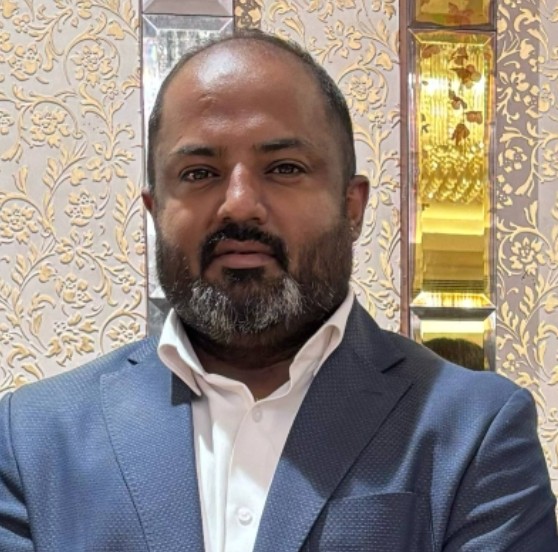
Kunal Gill Head, Cloud Calling Practice, Proactive Data Systems
We'll get back to you shortly.