
Updated: 25 May 2026
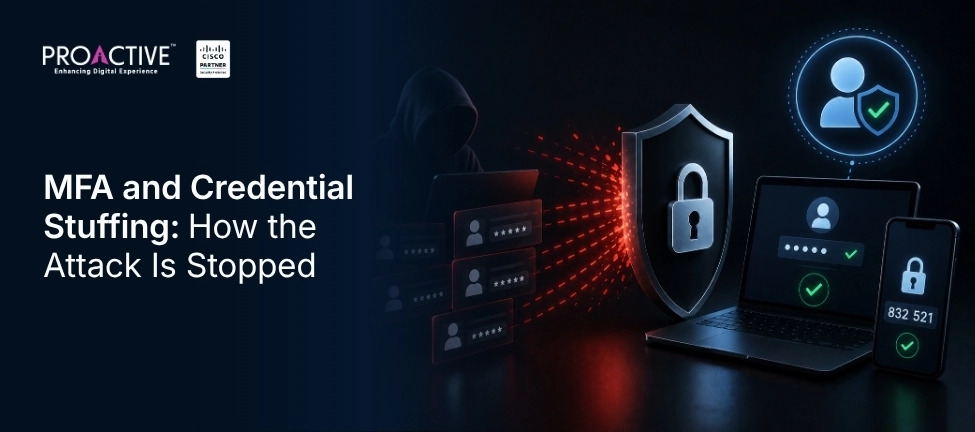
MFA stops credential stuffing by requiring a second factor that the attacker does not have. Even when an attacker holds a valid username and password, they cannot complete the login without the registered device, hardware token, or biometric that provides the second factor.
Credential stuffing is an automated attack. Attackers obtain large lists of username and password combinations from previous data breaches. They use automated tools to test those combinations across multiple services at high volume. The attack succeeds when users reuse the same password across services.
The scale is significant. Billions of credential pairs from past breaches circulate on criminal marketplaces. Any organisation whose users reuse passwords is exposed to this attack regardless of how strong its own security controls are.
MFA breaks the attack at the second factor. The attacker has the password. They do not have the user's phone, hardware token, or FIDO2 key. The login attempt fails at the second step every time.
For Indian enterprises, credential stuffing is a documented contributor to the financial cyber fraud losses reported on India's National Cyber Crime Reporting Portal, which reached Rs 36,450 crore as of February 2025. Banking credentials and payment platform accounts are primary targets.
Cisco Duo stops credential stuffing across every application it protects. Push notifications, hardware TOTP tokens, and FIDO2 keys all satisfy the second factor requirement. None of them can be completed by an attacker working remotely with a stolen password alone.
Proactive Data Systems, a Cisco Preferred Security Partner, deploys Cisco Duo across Indian enterprise environments and begins every engagement with a credential audit to identify accounts at highest risk of credential stuffing exposure.

Proactive Cybersecurity Team
We'll get back to you shortly.
