
Updated: 21 April 2026
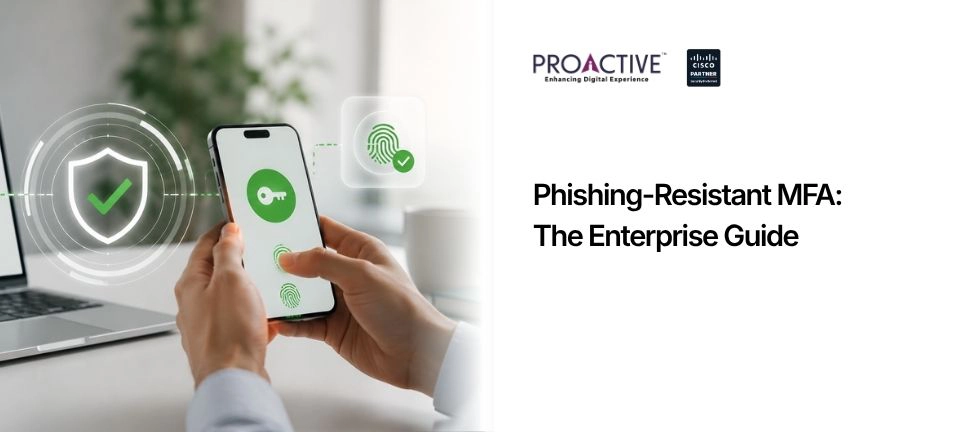
Phishing-resistant MFA is authentication that cannot be intercepted, redirected, or socially engineered. Unlike standard MFA, it does not rely on a code or approval that a user can be tricked into providing. The two main forms are FIDO2 hardware security keys and platform biometrics tied to a specific device and domain.
Standard MFA stops automated credential attacks. It does not stop a determined human attacker. SMS OTPs can be intercepted via SIM-swap. Push notifications can be approved by a fatigued or deceived user. Time-based OTP codes can be captured in real time by an adversary-in-the-middle proxy. All three attack types are documented and actively used.
Phishing-resistant MFA eliminates these vectors. A FIDO2 key generates a cryptographic response tied to the specific domain requesting authentication. A fake login page receives a response it cannot use. The attack fails at the protocol level, not at the human level.
This matters for Indian enterprises for a specific regulatory reason. RBI Authentication Directions 2025 require factor independence and dynamic factors for higher-risk transactions. The framework explicitly acknowledges FIDO2 as a preferred authentication method. SMS OTP does not meet the dynamic factor standard for non-card-present transactions.
CERT-In CISG-2025-02 requires MFA for all remote access without specifying factor type. However, auditors assessing privileged access controls increasingly expect phishing-resistant factors for administrator accounts.
Cisco Duo supports FIDO2 security keys, platform biometrics, and Verified Push across all its licensing tiers. Verified Push is not FIDO2 but it removes the social engineering vector that makes standard push vulnerable.
Proactive Data Systems, a Cisco Preferred Security Partner, recommends phishing-resistant factors for all privileged accounts in every Cisco Duo deployment across Indian enterprise environments.

Proactive Cybersecurity Team
We'll get back to you shortly.
